This quick convenience news blog provides readers glances of current events, breadth of finance reports, current event captions, and policy changes that each citizen should pay attention to. It is written as of a friend telling you as if you are riding the subway or the “T” dreading your upcoming work day. Click the link, sign up and enjoy! Learn more…
There are foundational gaps correlated to the US academic summer calendar and amount of time children are away from organized intellectual stimulation. With his teaching, coaching and camp director experience, Aaron Dungca wants to share his educational perspective for all.
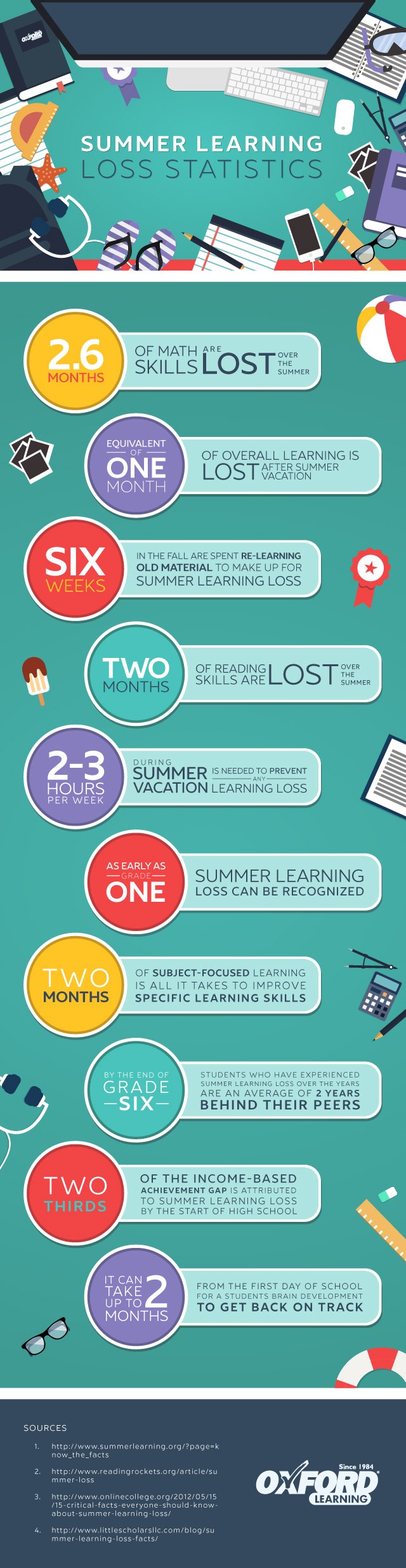
April 4, 2019: Families across the US are faced with a problem of education gap with their children that is non-discriminatory and inevitable with trends pointing to higher occurrences. According to a recent study by NWEA (Northwest Evaluation Association) rates in children who experienced repetitive summer learning loss are behind 2 academic years on average compared to their peers by sixth grade. It then takes up to two months after the first day of school to achieve the same level of brain development.
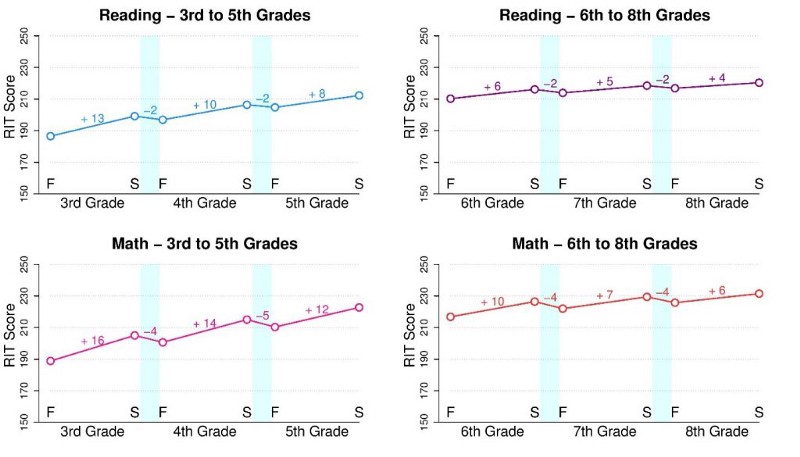
The education gap occurs in all families and does not typically mean lower income families are always most affected. Current research gathered evidence during the 36 weeks students are in school and have concrete evidence of RIT(Rasch Unit Scale) showing on average students gain 13+ points during the year and lose 3–5 points during the summer months.
This lag of education is not a fault from schools but a lack of understanding or focus by most populations during the ease of summer vacation. Schools attempt to balance family vacation time through a minimal summer reading plan. This strategy is to apply a maintenance plan on reading skills children possess before leaving school for 8 weeks. However, reading alone does not address the holistic make up of a child. Stimulation in math concepts, social-emotional learning, physical activity and natural curiosity still need to be satisfied and nourished in order to fully support the growing spirit, mind and body of a child.
Addressing the decline of academic stimulation for a child can take on many shapes and sizes. Examples like visiting the local library and participating in book events, creating posters, advertisements or public service announcements requiring accurate spelling and images, comic book stories, and nightly story time. Such activities can be done immediately, continuously and act as a fun activity (pending the provider has much energy and excitement presenting the stimulus!)
Summer learning loss fortunately is well known among educators and youth development professionals. Many educators take on a second role within summer camp organizations or enrichment programs. Organizations and programs have much to offer and varies in costs and services. If a camp or enrichment program is a choice families would like to make for their child, some points of interest that provide credibility and trust should be present within the organization. These points of interest address safety, curriculum, and cost. A great way to find credible camps have accreditation from the American Camp Association. Accreditation is a comprehensive process in which demonstrates the compliance of a camp towards mandatory standards that spans nationwide and differs from licensing, which is state to state. Finding summer camps under this criteria is an increased credibility and security. According to a five year camp impact study, the American Camp Association show findings that children are able to learn transferable skills such as problem solving, effective communication, relationship building, and delayed gratification. These skills show tremendous impact in the life of a child outside and inside of the academic year. They promote social and situational diversities that allow for a child to be successful under daily or acute life stressors.
These acquisitions of skills have connections in decreasing the learning gap, promote positive brain development and developmental social-emotional intelligence. The benefits for a child attending summer camps, creative programs, and movement activities is an investment that would prove to have a return on investment worthy for long term contributions.
About Aaron Dungca
Aaron Dungca, a former wellness teacher, coach, and camp manager with 8 years experience combating summer learning loss and building social-emotional intelligence in children. According to his experiences, children need more impactful opportunities that compete with the technological readiness of smart devices. Museums, libraries, parks, camps, and family togetherness are some of the stages children can obtain high potency content outside of social media platforms with credibility and at low to no cost.
I have been following and listening to a podcast that caught my attention awhile ago. Two Australian podcast hosts are very entertaining and knowledgeable about their topics of the mysterious universe that we live in…
This is a short blog, but to inform you and reel you in as I was. The two hosts are Aaron Wright @ and Benjamin Grundy and they compliment each other so well that you feel as though you are right there with them talking about the most interesting and bizarre things that is out there in the world! Check them out on the link above! @mysteriousuniv
Some examples are: Bigfoot Mania, UFOs, Gods and Goddesses, Human Evolution, Human Feats, Natures fury, etc. I would send you to the first podcast that I listened to and have been hooked ever since. Here is the story…
In the late 1920s, before his death, a Swiss language teacher in Greece left his secret diary to his favourite student for translation. As he began the translation it became apparent that this was no ordinary diary and its contents would soon become an object of fascination and secrecy to Freemasons and Theosophists alike.
We reveal the story of the diary and the bizarre claims of its author, Paul Amadeus Dienach.
This page consist of the wellness resources that enhances teaching, leading, and learning for all ages.
1. Mindfulness : Jon Kabat-Zinn, Ph.D. is internationally known for his work as a scientist, writer, and meditation teacher engaged in bringing mindfulness into the mainstream of medicine and society. He is Professor of Medicine emeritus at the University of Massachusetts Medical School, where he founded its world-renowned Mindfulness-Based Stress Reduction Clinic (in 1979), and the Center for Mindfulness in Medicine, Health Care, and Society (in 1995). He retired from his positions at the medical center in 2000. The Center for Mindfulness has been under the leadership of Dr. Saki Santorelli since that time, and during those years, it has grown remarkably and its programs have become more and more influential both in the US and internationally. Learn more…
2. Social Emotional Learning: This special issue of the journal The Future of Children examines the development of social and emotional learning (SEL) in school and afterschool settings, finding that these skills are essential for children and that teachers and OST staff need professional development to help children acquire them. The issue also covers major policy issues in education like teacher preparation, school discipline, and school-based assessment for intervention and accountability purposes. The editors urge a greater focus on outcomes at the teacher and classroom level; a focus on skills appropriate to each grade and age; and that measurement should narrow in focus but be broader in context and depth. At its core, the editors write, social and emotional leaning involves children’s ability to learn about and manage their own emotions and interactions in ways that benefit themselves and others, and that help children succeed in schooling, the workplace, relationships, and citizenship. Learn more…
3. Restorative Justice: Restorative justice is a theory of justice that focuses on mediation and agreement rather than punishment. Offenders must accept responsibility for harm and make restitution with victims. The concept has been around for hundreds of years, with indigenous people, like the Maori, using restorative justice successfully in their communities for generations. In the late 20th century, restorative justice gained traction in the US and other countries as various groups sought to improve the effectiveness of the criminal justice system. Learn more…
4. Interdisciplinary Curriculum: Mike, a 2nd grader, defines mathematics as “something you do in the morning.” Unfortunately, his statement reflects an internalization of mathematics as an experience to be absorbed from 9:45–10:30 a.m., and certainly before recess. We rarely explain to students why the school day is designed as it is. It should be no surprise then that students look at the arbitrary divisions for reading, math, social studies, science, art, music, and physical education and begin to define the subject areas as separate bodies of knowledge with little relationship to one another. Learn more…
5. Nutrition: Ninety percent of all public high schools in the United States teach ninth- and 10th-graders basic nutrition, while 80 percent offer nutrition education to 11th- and 12th-graders, too, according to the Institute of Education Sciences. The overall goal in teaching nutrition to high school students is to give them the tools they need to make healthy eating choices for a lifetime. The way the nutrition curriculum looks across public high schools can vary, but almost all of them attempt to accomplish similar goals. Learn more…
6. Curriculum in Physical Education: Curriculum — one of the four essential components of physical education — is the written, clearly articulated plan for how standards and education outcomes will be attained.
School districts and schools should have a written physical education curriculum for grades K-12 that is sequential and comprehensive. It should be based on national and/or state standards and grade-level outcomes for physical education, and should include learning objectives for students as well as units and lessons for teachers to implement.
The physical education curriculum should mirror other school district and school curricula in its design and schedule for periodic review/update.
Overall, the physical education curriculum serves the purpose of standardizing the curriculum in a school district across schools and ensuring equitable education for all students. It also results in improved teacher quality and increased consistency in instruction. Learn more…
I am not sure on how I am doing with my blogs, videos, and social media presence. Every day is a journey and every day is a learning curve.
Today I joined Haro in order to participate in the world I live in and collect more traffic online. I have also learned how to repost Instagram videos and posts, hashtag, and back link pages to other social media platforms. These concepts are not hard to do, but to effectively make them do what you want them to do takes a bit more tinkering or if some could just teach me, it would be great. There is always youtube…and that is where I am now.
1. One who is attached to another by affection; one who entertains for another sentiments of esteem, respect and affection, which lead him to desire his company, and to seek to promote his happiness and prosperity; opposed to foe or enemy.
FRIEND, verb transitive frend. To favor; to countenance; to befriend; to support or aid. [But we now use befriend.]
I had a friend that called me last night after months of no contact. He is a friend that I have been fortunate enough to have met and stayed in contact with. He called me to say hello, see what I needed, and to just get an update about life in general. He called because he cared, he calls because we are friends, he will call again because life is filled with people we love that out weight the people we dislike. Thank you for the small gesture of calling and saying hello. We needed it. Thanks friend.
Integrity, strength, and the relentless pursuit of good over evil – these are the qualities that define me. As a person deeply committed to these principles, I have dedicated my life to saving and changing lives, and to making a lasting impact on my community. My name is Aaron C. Dungca, and I am a proud Filipino, a devoted husband, and a loving father.
Integrity is the cornerstone of my character. It is the unwavering commitment to honesty, transparency, and ethical behavior that has guided me in every decision I’ve made throughout my life. This steadfast moral compass allows me to navigate the challenges of life, as I strive to be a role model for my children and the people around me. I believe that honesty and trustworthiness are crucial in fostering genuine relationships and nurturing an environment where everyone feels respected, valued, and heard.
Strength is not only the physical power to overcome obstacles, but also the mental and emotional resilience that enables me to persevere through difficult situations. I have faced countless hardships and setbacks, but I have always found the inner strength to push forward and rise above adversity. By embracing vulnerability and showing empathy for others, I have built a solid foundation that supports my personal growth and allows me to help those around me. As a husband and father, I have learned the importance of balancing my personal needs with the needs of my family, providing a loving and supportive environment where we can all flourish together.
My commitment to good over evil drives me to make a positive impact on the world. I have saved lives, both literally and figuratively, by using my skills and resources to provide assistance to those in need. I have volunteered my time and expertise in various community organizations, working to improve the lives of the less fortunate and the vulnerable. Through acts of kindness, generosity, and selflessness, I have managed to change the lives of many people, inspiring hope and providing the tools needed for them to build a brighter future.
As a proud Filipino, I am deeply rooted in the rich cultural heritage of my people. I celebrate the warmth, resilience, and unity that define the Filipino spirit, and I am determined to pass on these values to my children. I have made it my mission to uplift the Filipino community and to strengthen the bond between the Philippines and the global community through cultural exchange, education, and collaboration.
As a husband and father, my family is my greatest source of joy and inspiration. I strive to be a compassionate and supportive partner to my spouse, and a nurturing, patient, and caring parent to my children. Together, we create a loving home, built on trust, understanding, and mutual respect, where we grow together and celebrate life’s triumphs and challenges.
In conclusion, my identity as Aaron C. Dungca – a person of integrity, strength, and a champion of good over evil – is defined by my unwavering commitment to making a positive impact in the lives of others. As a proud Filipino, a devoted husband, and a loving father, I am determined to continue saving and changing lives, and to give back to my community, uplifting those who cannot do so themselves. I am resolute in my pursuit of a better world, where compassion, empathy, and kindness triumph over darkness and despair.




 Aaron Dungca Blogs